Text & Voice Interaction
Natural communication can serve as an interaction and information layer for specialized systems and digital processes.
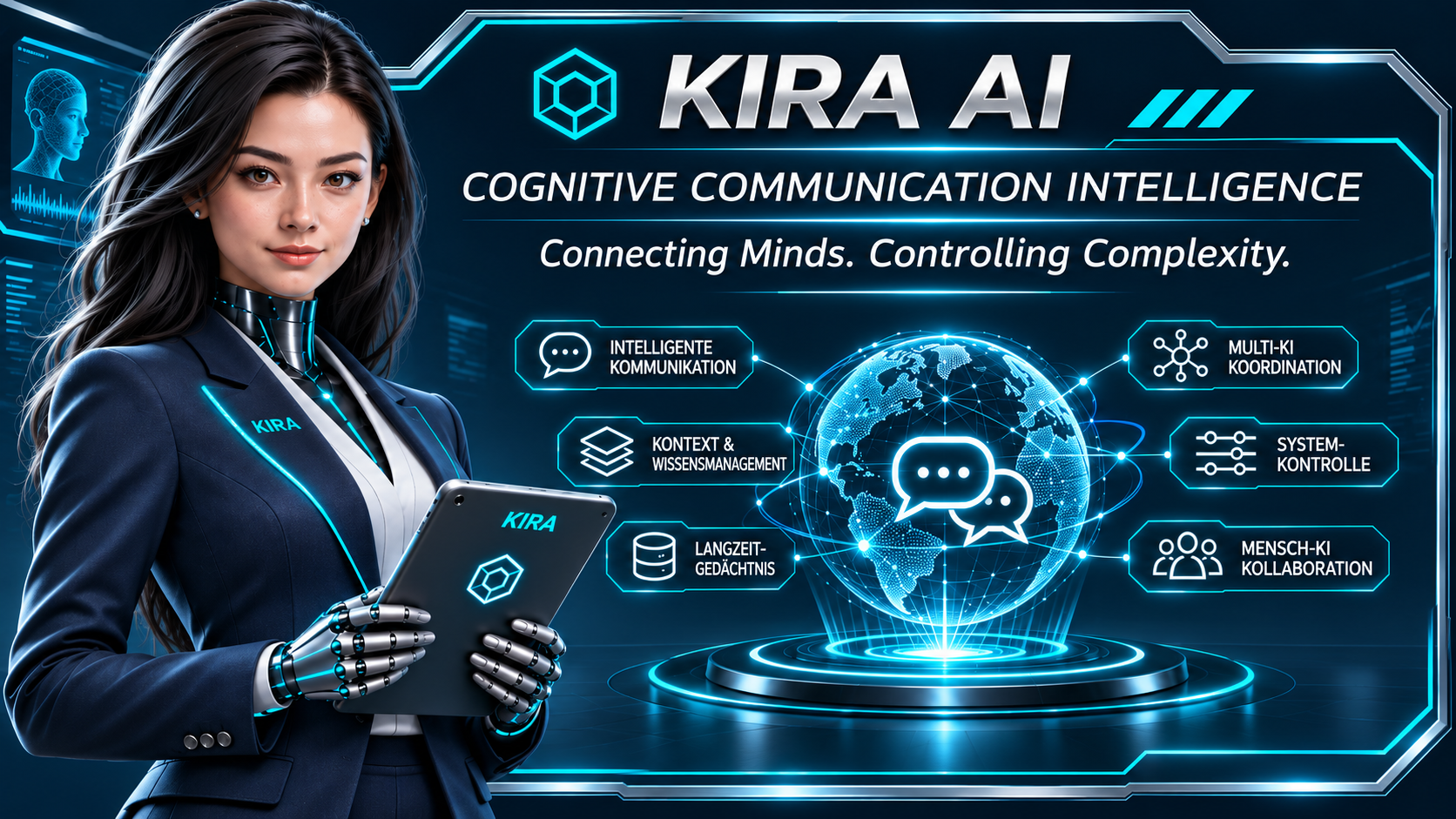
Internal ESSCON reference system for communication AI, human-AI interaction and connecting people, knowledge, processes and specialized AI systems.
Kira AI is an internal ESSCON reference system for communicative AI, human-AI interaction and the controlled mediation between people, expertise, digital processes and other AI systems.
The system demonstrates how text, voice, user guidance, context, knowledge access and multi-AI coordination can be integrated into a unified communication layer.
Kira shows how complex AI functions become understandable and safely usable for people.
As a reference system, Kira combines language, dialogue, knowledge access and controlled handoffs with real processes. Client solutions adopt the communication and interface components required for the actual workflow.
Kira exemplifies AI systems that make complex technical or specialized functions accessible to people, put information into context, conduct dialogues and mediate between users, processes and specialized systems.
Natural communication can serve as an interaction and information layer for specialized systems and digital processes.
Complex functions become accessible through clear dialogues, guided workflows and context-based support.
Kira can be used as a communication and control layer between people and specialized AI roles.
Approved corporate, specialist and process information can be incorporated into communication according to the situation.
Customer service, training, internal assistance and operational communication can be connected to real-world workflows.
Tasks can be handed off between people, AI and specialized systems without losing the process context.
Communication AI does not start with a chat window. It starts with user role, information needs, language, handoffs and the limits of what AI may decide or execute.
Existing workflows, roles, data sources, systems, breaks in media continuity and decision points are documented together with the client.
It is defined which tasks AI supports, prepares or automates, and which decisions remain with people.
Models, memory, knowledge sources, interfaces, tools, permissions and operational boundaries are combined into a suitable system architecture.
The AI is connected to existing software, APIs, databases, communication channels, remote systems or specialist applications.
Functionality, output quality, permissions, error cases, approvals and fallback paths are reviewed against the specific business process.
Documentation, roles, the operating model, monitoring and further development are aligned with the client's actual use case.
Kira is a reference for situations in which AI must explain knowledge, guide users, understand speech and mediate between people, specialist systems and other agents.
AI support and automation in existing operational and administrative workflows.
Specialized AI for defined knowledge, analysis, communication or decision-making tasks.
AI integration into IT, engineering, data analysis, remote operations and technical infrastructures.
Multiple specialized AI roles work in a coordinated manner within a shared process and permissions context.
Text, voice and user interfaces connect employees, customers or operators with complex AI functions.
Development of new systems for complex processes that combine specialized roles, tools and integrations.
Kira-oriented systems connect dialogue and execution without forcing users to understand every technical interface. Rights, context and approvals remain explicit.
Word processing · Spreadsheets · Presentations · PDFs · Forms · Templates · Document generation · Digital files
Mailboxes · SMTP/IMAP · Calendars · Appointments · Contacts · Invitations · Tasks · Reminders
CRM · Leads · Contacts · Quotes · Service cases · Customer history · Follow-ups · Sales processes
ERP · Procurement · Inventory management · Stock levels · Orders · Invoicing processes · Personnel and resource planning
Document management · Archives · Wikis · Knowledge bases · Intranet · Full-text search · Specialist libraries
Websites · Portals · Dashboards · Forms · Booking systems · Administrative interfaces · Browser-based specialist software
REST · GraphQL · Webhooks · SDKs · MCP · Proprietary APIs · Bridges · Event interfaces
SQL · NoSQL · Vector Stores · Graph databases · Time series · Data warehouses · Object storage · NAS
Dashboards · Reporting · ETL/ELT · Notebooks · Statistics · Time series · KPI systems · Data visualization
Source code · IDEs · Git · Repositories · Build systems · Tests · CI/CD · Package managers · Issue trackers
Shell · PowerShell · Processes · Services · Logs · Jobs · File system · Configuration · User and permissions management
Linux · Windows Server · Virtual machines · Containers · Clusters · Storage · Network services · Backup systems
Private Cloud · Public Cloud · Hypervisor · Container orchestration · Cloud storage · Serverless · Virtual networks
Metrics · Logs · Traces · Alerting · Health checks · Operations dashboards · Incident and event systems
Team chats · Video conferences · Collaboration platforms · Tickets · Boards · Project and task management
VoIP · Telephone systems · SMS · Business Messaging · Voice Bots · Contact Centers · Notification systems
Speech-to-Text · Text-to-Speech · Dictation · Transcription · Audio analysis · Voice control · Multilingual interfaces
Image analysis · Cameras · Video · Streaming · Media archives · Image generation · Document scanning · Visual quality inspection
CAD · Technical drawings · Simulation · CAE · Bills of materials · Engineering data · PLM · Technical documentation
Maps · Geospatial data · Satellite data · Location analysis · Routes · Area models · Geofencing · Infrastructure maps
SCADA · MES · Historian · OPC UA · Fieldbus/gateway data · Machine states · Production data · Control centers
PLC/SPS via approved gateways · Sensors · Actuators · IoT platforms · Edge devices · Telemetry · Measurement systems
Industrial and service robotics · Cobots · AGV/AMR · Drones · Cameras · Actuators · Autonomous devices · Humanoid systems
EMS · BMS · Meters · Inverters · Storage systems · Charging infrastructure · Building automation · Facility monitoring
Identity & Access · SIEM · Security monitoring · Vulnerability management · Certificates · Policies · Audit and backup systems
Measuring instruments · Data Acquisition · Scientific software · HPC jobs · Research data · Simulation · Laboratory workflows
Market data · Risk models · Controlling · Treasury · Payment workflows · Reporting · Scenario and portfolio analysis
Contract management · Case files · Deadlines · Research · Templates · Administrative processes · Compliance documentation
Webshops · Product catalogs · Booking · Helpdesk · Returns · Service portals · Order and support processes
Remote Desktop · Remote Terminal · Smartphones · Tablets · Edge systems · Mobile apps · Distributed workplaces
Access control systems · Building management systems · Cameras · Technical equipment · Vehicles · Machines · Connected infrastructure
Any further software or machine that can be securely integrated via an API, protocol, remote access, user interface or suitable adapter.
If a human can operate a tool digitally, it can, in principle, also become part of a controlled AI process.
Every integration is assigned a defined action framework: identity, rights, permitted actions, approval points, logging, error paths and, where applicable, human confirmation.
A Kira-oriented solution distinguishes between information that is explained, an action that is prepared and an action that may actually be executed. Handoffs retain their process context.
Existing communication channels, knowledge sources and applications can be integrated without turning AI into an uncontrolled universal interface.
In agent and reference systems, the model is only one part of governance. What matters equally is which data, tools and actions an AI may use in a given context. Roles, memory boundaries, human oversight and technical approvals are treated as system components.
The governance framework depends on task, autonomy and potential impact. Communication, analysis and technical execution can therefore receive different permissions and review paths.