Technical System Analysis
System states, configurations, logs, files and technical dependencies can be examined in a structured manner.
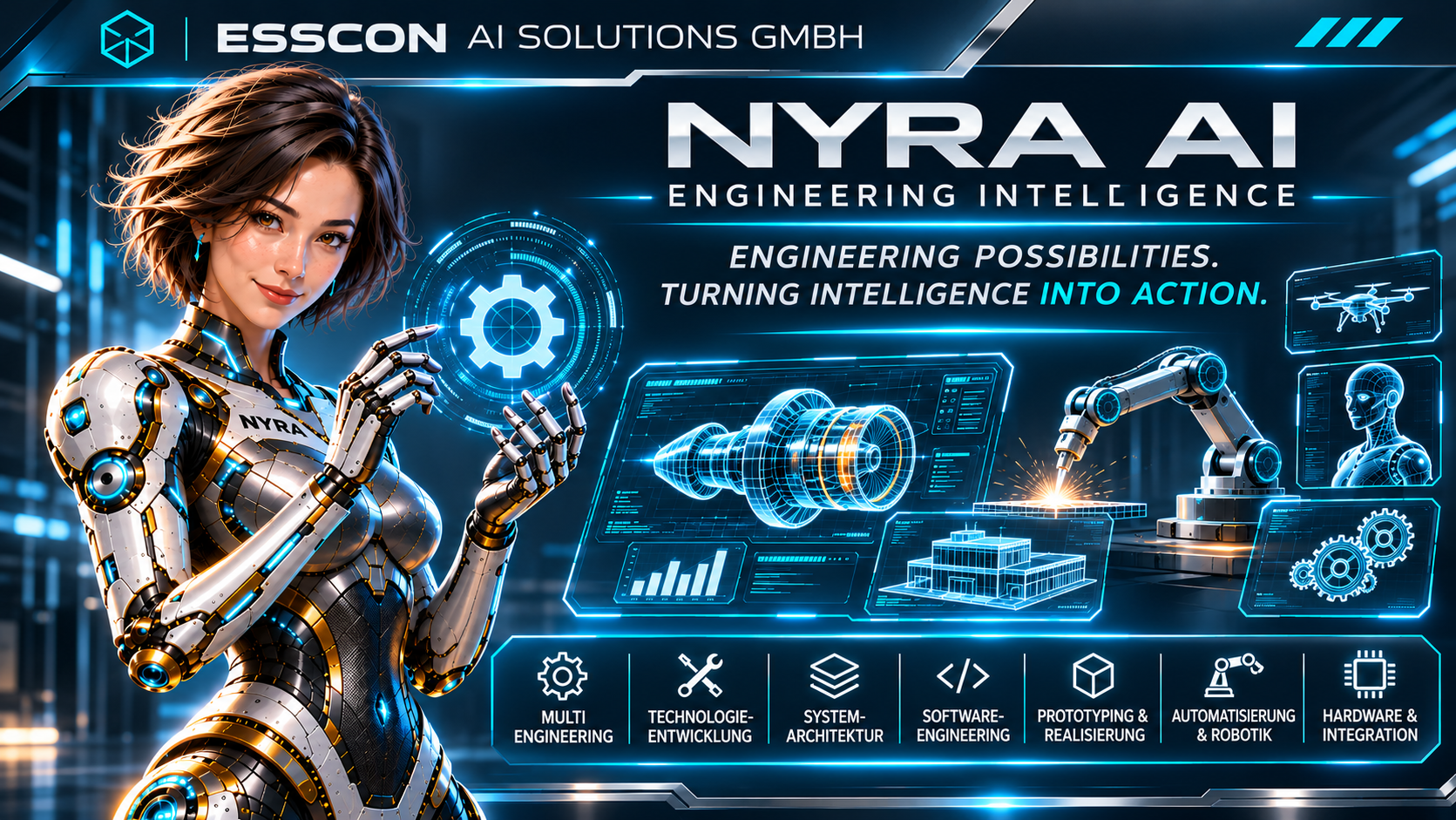
Internal ESSCON reference system for engineering AI, technical analysis and controlled execution on software, server and infrastructure systems.
Nyra AI is an internal ESSCON reference system for technical AI, engineering tasks and controlled execution on real-world systems and infrastructures.
The system demonstrates how AI can go beyond pure consultation: capturing technical states, analyzing structures, preparing work orders, using tools and documenting results in a traceable manner.
Nyra shows how technical analysis can become traceable engineering work.
As a reference system, Nyra works with technical states, files, logs, development and remote tools within defined permissions. Client solutions adopt the engineering, execution and verification components required for the task.
Nyra exemplifies specialized engineering AI that can work with servers, software, data, development tools and infrastructure within clearly defined permissions and technical interfaces.
System states, configurations, logs, files and technical dependencies can be examined in a structured manner.
Professional objectives are translated into concrete technical steps with verifiable inputs and outputs.
Approved development, remote, file and system tools can be used in a controlled manner.
Software components, interfaces and technical adaptations can be implemented within defined project boundaries.
Results are safeguarded through tests, logs, verification steps and traceable status records.
Different technical disciplines and system levels can be brought together within a shared project context.
Engineering AI turns goals, system state, tools, permissions and acceptance criteria into a controlled technical assignment rather than an open-ended agent run.
Existing workflows, roles, data sources, systems, breaks in media continuity and decision points are documented together with the client.
It is defined which tasks AI supports, prepares or automates, and which decisions remain with people.
Models, memory, knowledge sources, interfaces, tools, permissions and operational boundaries are combined into a suitable system architecture.
The AI is connected to existing software, APIs, databases, communication channels, remote systems or specialist applications.
Functionality, output quality, permissions, error cases, approvals and fallback paths are reviewed against the specific business process.
Documentation, roles, the operating model, monitoring and further development are aligned with the client's actual use case.
Nyra is a reference for tasks in which AI must not only explain, but inspect files, change configurations, integrate software, run tests or operate remote systems.
AI support and automation in existing operational and administrative workflows.
Specialized AI for defined knowledge, analysis, communication or decision-making tasks.
AI integration into IT, engineering, data analysis, remote operations and technical infrastructures.
Multiple specialized AI roles work in a coordinated manner within a shared process and permissions context.
Text, voice and user interfaces connect employees, customers or operators with complex AI functions.
Development of new systems for complex processes that combine specialized roles, tools and integrations.
Nyra-oriented architectures bind tool access to system state, permissions, test criteria and evidence. Technical execution therefore remains verifiable.
Word processing · Spreadsheets · Presentations · PDFs · Forms · Templates · Document generation · Digital files
Mailboxes · SMTP/IMAP · Calendars · Appointments · Contacts · Invitations · Tasks · Reminders
CRM · Leads · Contacts · Quotes · Service cases · Customer history · Follow-ups · Sales processes
ERP · Procurement · Inventory management · Stock levels · Orders · Invoicing processes · Personnel and resource planning
Document management · Archives · Wikis · Knowledge bases · Intranet · Full-text search · Specialist libraries
Websites · Portals · Dashboards · Forms · Booking systems · Administrative interfaces · Browser-based specialist software
REST · GraphQL · Webhooks · SDKs · MCP · Proprietary APIs · Bridges · Event interfaces
SQL · NoSQL · Vector Stores · Graph databases · Time series · Data warehouses · Object storage · NAS
Dashboards · Reporting · ETL/ELT · Notebooks · Statistics · Time series · KPI systems · Data visualization
Source code · IDEs · Git · Repositories · Build systems · Tests · CI/CD · Package managers · Issue trackers
Shell · PowerShell · Processes · Services · Logs · Jobs · File system · Configuration · User and permissions management
Linux · Windows Server · Virtual machines · Containers · Clusters · Storage · Network services · Backup systems
Private Cloud · Public Cloud · Hypervisor · Container orchestration · Cloud storage · Serverless · Virtual networks
Metrics · Logs · Traces · Alerting · Health checks · Operations dashboards · Incident and event systems
Team chats · Video conferences · Collaboration platforms · Tickets · Boards · Project and task management
VoIP · Telephone systems · SMS · Business Messaging · Voice Bots · Contact Centers · Notification systems
Speech-to-Text · Text-to-Speech · Dictation · Transcription · Audio analysis · Voice control · Multilingual interfaces
Image analysis · Cameras · Video · Streaming · Media archives · Image generation · Document scanning · Visual quality inspection
CAD · Technical drawings · Simulation · CAE · Bills of materials · Engineering data · PLM · Technical documentation
Maps · Geospatial data · Satellite data · Location analysis · Routes · Area models · Geofencing · Infrastructure maps
SCADA · MES · Historian · OPC UA · Fieldbus/gateway data · Machine states · Production data · Control centers
PLC/SPS via approved gateways · Sensors · Actuators · IoT platforms · Edge devices · Telemetry · Measurement systems
Industrial and service robotics · Cobots · AGV/AMR · Drones · Cameras · Actuators · Autonomous devices · Humanoid systems
EMS · BMS · Meters · Inverters · Storage systems · Charging infrastructure · Building automation · Facility monitoring
Identity & Access · SIEM · Security monitoring · Vulnerability management · Certificates · Policies · Audit and backup systems
Measuring instruments · Data Acquisition · Scientific software · HPC jobs · Research data · Simulation · Laboratory workflows
Market data · Risk models · Controlling · Treasury · Payment workflows · Reporting · Scenario and portfolio analysis
Contract management · Case files · Deadlines · Research · Templates · Administrative processes · Compliance documentation
Webshops · Product catalogs · Booking · Helpdesk · Returns · Service portals · Order and support processes
Remote Desktop · Remote Terminal · Smartphones · Tablets · Edge systems · Mobile apps · Distributed workplaces
Access control systems · Building management systems · Cameras · Technical equipment · Vehicles · Machines · Connected infrastructure
Any further software or machine that can be securely integrated via an API, protocol, remote access, user interface or suitable adapter.
If a human can operate a tool digitally, it can, in principle, also become part of a controlled AI process.
Every integration is assigned a defined action framework: identity, rights, permitted actions, approval points, logging, error paths and, where applicable, human confirmation.
Technical actions are linked to logs, tests, file states or other receipts. This makes it possible to verify not only what was planned, but what was actually changed and tested.
Existing engineering and remote tools can remain in use; AI becomes a controlled execution layer within the established technical process.
In agent and reference systems, the model is only one part of governance. What matters equally is which data, tools and actions an AI may use in a given context. Roles, memory boundaries, human oversight and technical approvals are treated as system components.
The governance framework depends on task, autonomy and potential impact. Communication, analysis and technical execution can therefore receive different permissions and review paths.